
I-70 in Snow: A Local Driver’s Field Guide
Chain laws, vehicle setup, the mile markers where conditions actually change, and an honest take on when to reconsider the drive.
There is a moment most out-of-state visitors do not see coming. You are 90 minutes into the drive from DIA toward Vail. The sky was clear in Denver. Somewhere past Idaho Springs, the road starts climbing in earnest. The temperature drops 15 degrees in 20 minutes. Snowflakes start hitting the windshield. Your AWD rental car was fine in the city. It feels different on a 6% grade with packed snow on the road.
You check your phone. CDOT just activated the Passenger Traction Law for this stretch of I-70. You are not sure what that means.
Most people learn what it means in the wrong order. They figure it out 10 miles past the sign, on a road they have no business being on without the right setup.
This guide is the prerequisites version. Read it before the drive, not during.
The Chain Law (what CDOT actually requires)
Colorado runs two activated rules for I-70 in winter conditions, and most rental car drivers have never heard of either.
The Passenger Traction Law
When CDOT activates this, every passenger vehicle on the stretch of I-70 between Dotsero and Morrison (which covers all the mountain driving most visitors do) must have one of:
- All-wheel drive or four-wheel drive with mud-and-snow rated tires.
- Two-wheel drive with mud-and-snow tires that have at least 3/16 inch of tread.
- Tire chains, AutoSocks, or another approved alternative traction device installed.
If you do not meet one of these requirements, you can be fined and turned around at a CDOT checkpoint. Local law enforcement does check during active conditions.
The Passenger Vehicle Chain Law
This is the stricter version. When CDOT activates it (typically during heavier storms), every passenger vehicle must have chains or an approved alternative traction device installed and engaged. Mud-and-snow tires alone are not enough.
A few things to know
- The laws can activate and de-activate during the day. Watch cotrip.org or the CDOT app before you leave.
- Most rental cars from DIA come with all-season tires, not mud-and-snow. Check the tire sidewall for the ‘M+S’ or ‘3PMSF’ (three-peak mountain snowflake) symbol before you drive out of the lot.
- Chains can be rented in Denver or in Idaho Springs. Idaho Springs is the last chain-friendly stop before the steep grades begin.
AWD vs. 4WD vs. Snow Tires (the real-world difference)
This is the question most visitors get wrong.
Snow tires matter more than the drivetrain on I-70.
A two-wheel-drive car with dedicated snow tires will out-perform an all-wheel-drive car with all-season tires on a packed-snow road. The drivetrain helps you accelerate. The tires help you stop and steer. Stopping and steering are what keep you safe at 10,000 feet on a downgrade.
AWD is fine for most I-70 conditions, with the right tires.
A standard AWD crossover with mud-and-snow tires can handle a moderate snow day on I-70 without trouble. The vehicle’s clearance does not matter much because the road is plowed. What matters is grip.
4WD with low range is for the deep stuff.
If conditions deteriorate past the typical I-70 snow day (truly heavy storm, drifting snow on the road), a 4WD truck or SUV with low-range gearing is the right tool. Most luxury SUVs (Yukon, Denali, Escalade) are full-time 4WD with low range. Many crossovers are not.
A note on rentals
If you are renting at DIA in winter, ask specifically for a vehicle with mud-and-snow rated tires. The agents do not volunteer this information. Some rental companies have winter-equipped fleets. Many do not.
Where I-70 Conditions Actually Change
The drive from DIA to Vail covers about 100 miles. Conditions are not uniform across that distance. Here is where they shift.
Denver to Idaho Springs (about 35 miles)
Normal interstate. Snow rarely sticks at lower elevations. You can drive 60 to 70 mph in clear conditions. Traffic builds on weekends in both directions.
Idaho Springs to Loveland Ski Area (about 25 miles)
This is where the grade gets serious. The road climbs from 7,500 feet to over 10,500 feet. Steeper curves. Black ice on shaded north-facing turns. This is where unfamiliar drivers most often run into trouble.
The Eisenhower-Johnson Tunnel (Mile Marker 213)
At 11,158 feet, this is the highest highway tunnel in the United States. It cuts through the Continental Divide. The road inside the tunnel is dry. The road on the other side of the tunnel is often a different weather system.
Tunnel to Silverthorne (about 8 miles)
The descent off the Continental Divide. Switchbacks. Wind. Conditions can be wildly different from the east side of the tunnel.
Silverthorne to Vail (about 35 miles)
Relatively flat by mountain standards. Dillon Reservoir on the left. The road follows the Blue River. Then Vail Pass.
Vail Pass (Mile Marker 190, elevation 10,662 feet)
The highest exposed driving on the route. Wind is the issue more than snow. Crosswinds on a fully loaded SUV at 10,000 feet behave differently than crosswinds at sea level.
Vail Pass to Vail Village (about 10 miles)
The descent into the valley. Final stretch.
The Eisenhower Tunnel and Why It Matters
The tunnel is the route’s most important asset. It also has rules most visitors do not know about.
- Truck restrictions. Vehicles carrying certain hazardous materials cannot use the tunnel. They are routed over Loveland Pass instead, which closes in heavy snow.
- Tunnel closures. When the tunnel closes (rare but possible during major incidents), traffic is rerouted over Loveland Pass. Loveland Pass adds 30 to 60 minutes and includes 6% grades on a two-lane road at 12,000 feet. Not where most rental car drivers want to be in a storm.
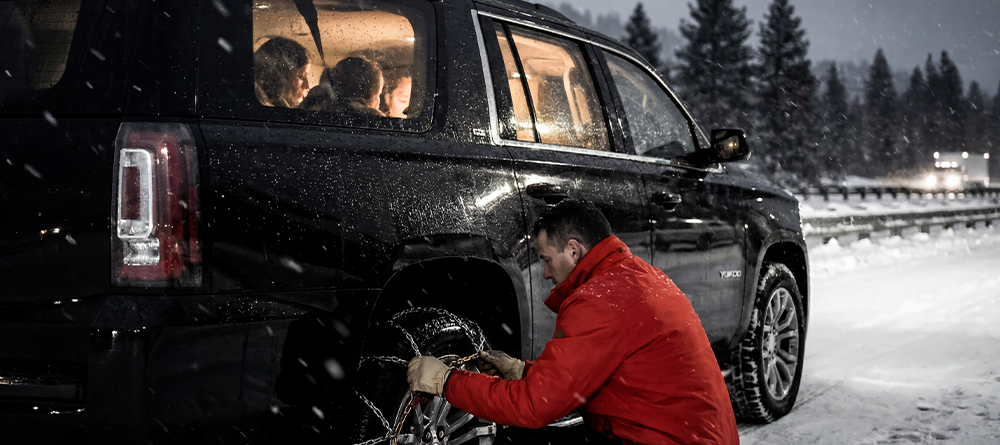
- The tunnel as a weather break. A useful local trick: if conditions are deteriorating on the east side, the tunnel buys you 90 seconds of dry road to gather yourself before the west side, which may or may not be worse. We have stopped at the maintenance pull-off on the west exit more than once to chain up after the tunnel.
The Vail Pass Wind Reality
Vail Pass at 10,662 feet is exposed terrain. The wind affects driving in three specific ways most visitors do not anticipate.
- Crosswinds push tall vehicles. A fully loaded SUV at highway speed in a 40 mph crosswind will move within the lane. Slow down. Hold the wheel.
- Wind sweeps snow across the road. Even on a clear day, packed-snow patches can form from drift. The road can look clear and not be.
- Whiteout conditions hit fast. A drift cloud can drop visibility to under 50 feet in seconds, then clear in seconds. Drive Vail Pass with eyes wide open.
The local move on Vail Pass: keep your speed down, leave extra following distance, and never assume the road is clear because the lane in front of you is.
When I-70 Closes (and How to Know Before You Leave)
I-70 closes more often than visitors realize. The reasons are usually:
- A multi-vehicle accident on a steep grade.
- An avalanche-control closure (CDOT triggers slides preemptively).
- A jackknifed truck blocking lanes.
- Wind-driven whiteout conditions.
When it closes, the closure can last 30 minutes or 6 hours. There is no reliable way to predict.
Before any drive, check:
- cotrip.org. The official CDOT page. The most reliable real-time status.
- The CDOT mobile app. Push notifications for closures on your route.
- goi70.com. Community forum with real-time observations from drivers on the road.
Local rule: if cotrip shows the road closed at any point on your route, assume it will be closed for at least an hour. Do not leave until you see it reopen. Sitting in stationary traffic for three hours is worse than waiting an extra hour in Denver.
The Return-Trip Problem
This is the part most ski trips do not plan for.
On weekends with good snow, every ski lot fills, and every car on I-70 heads east at approximately the same time on Sunday afternoon. Eastbound I-70 between Vail and Idaho Springs becomes the worst traffic in Colorado. A drive that takes two hours westbound on a Friday can take four hours eastbound on a Sunday.
The local moves:
- Leave Saturday evening if you can. A Sunday morning drive east is much better than a Sunday afternoon drive.
- Stay an extra night. Sunday night drives east are uncrowded. Monday morning drives east are uncrowded.
- Eat dinner on the way down. A 5 p.m. dinner in Silverthorne lets traffic clear before you finish your entree.
- Avoid driving east between 1 p.m. and 6 p.m. on a sunny Sunday after a snowy weekend. The traffic is the worst you will see on the route.
What to Carry in the Vehicle
For any I-70 mountain trip in winter conditions, your vehicle should have:
- Chains or AutoSocks, even if you have AWD and mud-and-snow tires. The Passenger Vehicle Chain Law can activate without warning.
- Two gallons of water.
- Snacks (energy bars, nuts).
- Wool or fleece blankets for every passenger.
- Extra warm layers (gloves, hat, jacket beyond what you are wearing).
- Phone charger and a backup battery.
- A full tank of gas before you leave Silverthorne. Gas is more expensive and harder to find further west.
- A small folding shovel if you have room.
Most of this is for the worst-case scenario of being stranded for a few hours. The worst case is more common than visitors expect.
When the Drive Is Genuinely Not the Right Call
A few honest signals that the drive is not the move:
- The Passenger Vehicle Chain Law is active and you do not have chains.
- I-70 has been closed or partially closed in the last 4 hours.
- A storm warning is active with sustained winds over 40 mph.
- You are arriving at DIA after dark with limited mountain driving experience.
- Your rental does not have mud-and-snow tires and the conditions are deteriorating.
When any two of these apply, the right call is to either delay the drive (overnight in Denver, leave at first light) or to hand the wheel to a driver who does this route in every condition.
When to Hire a Local Driver Instead
A private mountain transfer is the right move when:
- You are arriving at DIA after a long flight, in winter conditions, with family and gear.
- You do not have mountain driving experience or a winter-equipped vehicle.
- The forecast is deteriorating and you do not want to navigate it yourself.
- You want to use the drive time to work, rest, or enjoy the views instead of gripping the wheel.
- You are traveling with kids who need car seats.
- You have a tight timeline to a dinner reservation, a meeting, or a slope opening.
Mountain transfer rates from DIA: $515 to Breckenridge or Keystone, $550 to Vail or Beaver Creek, $1,200 to Aspen or Steamboat. Door-to-door, flat rate, on any night of the year.
What’s Included When DriveDenver Handles Your Mountain Transfer
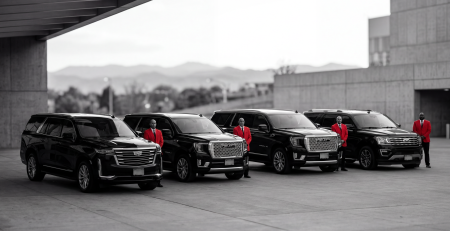
- A luxury SUV (Yukon, Denali, or Escalade) with full-time 4WD and mud-and-snow tires.
- A mountain-experienced chauffeur who drives I-70 every week. Chain installations, route alternatives, and storm-day judgment are part of the service.
- Flight-monitored pickup. Your driver tracks your flight from takeoff. We wait for you when flights are late.
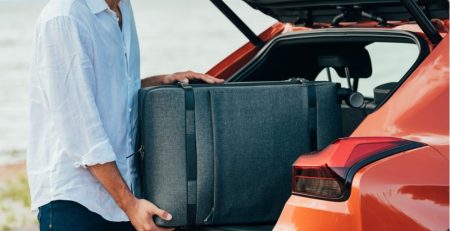
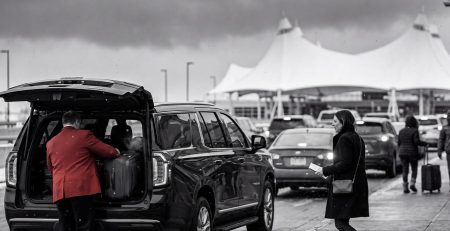
- Meet at DIA curb side. The driver wears an identifiable Red jacket, luggage handled.
- Car seats supplied on request.
- Multi-stop coordination (groceries in Frisco, gear pickup in Vail Village, your lodge).
- Door-to-door routing, ending at your front door, not a parking lot.
- Proactive updates throughout the drive. Real-time route adjustments based on conditions.
- Flat rates. The published rate is the rate, on any night of the year.
Frequently Asked Questions
Do you drive in any conditions, or do you cancel when the road is dangerous?
We drive in nearly all conditions because our vehicles and chauffeurs are equipped for them. We do not drive when CDOT closes the road. We do not drive when our judgment says the route is unsafe regardless of road status. When we cannot drive, we communicate with you in advance and reschedule without penalty.
What if I-70 closes during my transfer?
Your chauffeur has alternate route knowledge for the parts of I-70 that have safe detours. For full closures, we hold you in a safe location (a coffee shop in Silverthorne, a restaurant in Idaho Springs) and resume when the road opens. There is no hourly clock penalty for closure delays.
Do you chain up if conditions require it?
Yes. Chain installation is part of the service. Our chauffeurs carry the right equipment for our vehicles and know where to safely install them on the route.
Can you handle car seats and ski gear in the same vehicle?
Yes. Specify car seats and ski bag counts at booking. We bring the right vehicle.
Is the rate the same on storm days?
Yes. The published mountain transfer rate is the rate, on any night of the year. No surcharges for difficult conditions.
How early should I book a mountain transfer in winter?
A week or more is comfortable. The closer to a peak weekend (powder forecast, holiday weekend), the more vehicle options book up first.
Do you drive to ski resorts beyond Vail and Breckenridge?
Yes. Custom routes to Steamboat, Aspen, Crested Butte, and Telluride are quoted on request.
The Bottom Line
I-70 in winter conditions rewards experience and the right equipment. With both, the drive is straightforward. Without either, it is one of the highest-stakes routes in the country to learn on.
If you have the experience, the vehicle, and the day-of judgment, drive it. We have laid out everything we know to help. If you do not, the smart move is to hand the wheel to someone who does this route every week, in every condition, and to arrive at your lodge rested instead of relieved.
Reserve Your Mountain Transfer
Call or text 303-717-8113, or send your flight details and destination at drivedenvercarservice.com. We confirm within 2 hours.






Leave a Reply