

Hosting Out-of-Town Visitors in Denver: A Quiet Hospitality Playbook
The transportation moves that signal ‘you matter to me,’ for the host whose reputation rides on the visitor’s full experience.
The plane lands. Your visitor pulls out their phone, sees no messages from you, and walks outside of baggage claim. The next 45 minutes will form their impression of how this trip is going to go.
Most hosts under-think this part since the flight is booked, the hotel is booked, the dinner reservation is on the calendar. Which is why the gap between the airplane door and the hotel suite is left to the guest to figure out.
The visitors who matter mostly never say anything when this is handled badly. But they remember. The next time they consider flying out to see you, they’ll look back on their last trip and think twice.
This is the playbook for the hosts who don’t want to leave the ground transportation to chance.
Why the First and Last Hour of a Visit Matter Most
The dinner could be perfect, the meeting productive, the conversation easy, but the visit lives in the memory of the bookends.
Transportation is most of those bookends. The visitor lands, they leave the airport, they arrive at their hotel. That’s the first hour. The morning of departure, the ride to the airport, the wave goodbye. That’s the last hour.
A host who handles the bookends well sends a message that the rest of the visit was thoughtful, too. A host who lets those moments become an app-roulette experience signals something else.
Five Principles of Quiet Hospitality
The hosts who get this right operate on a few shared principles.
- The transport should feel seamless.
The visitor shouldn’t have to think about getting where they need to go. No app to download. No fare to negotiate. No standing in a pickup zone. No deciding whether to tip in cash or app. The car’s just there. They step in. They arrive.
If the visitor mentions the transport during the trip, something went wrong. The best logistics are the ones nobody talks about.
- The vehicle and chauffeur should fit the visitor.
A board member arriving for a fund meeting shouldn’t arrive in the same vehicle a college student would call. The vehicle is the visitor’s first physical experience of the city. It’s important to match the tier of the vehicle to the visitor’s expectations.
It’s easy to see this as showing off. But it’s actually about not making the visitor feel under-valued. A father-in-law in town to meet the new grandchild isn’t impressed by a Cadillac Escalade. Instead, he’s reassured by being met at the limousine level, not figuring out the airport on his own.
- The chauffeur should know everything about the visitor.
Before the visitor lands, your chauffeur should know:
- The visitor’s name, and how to pronounce it.
- Where the visitor is staying.
- What the trip is for (a board meeting, a wedding, family time).
- Any specific preferences (no chatter, conservative music, no shoes off, dietary).
- Who the host is and how to refer to them.
A briefed chauffeur serves as a small ambassador for the host, even before the guest gets to see them.
- The host should be present at the right moments.
The visitor doesn’t need the host to meet them outside of baggage claim. That would be impractical for a busy host. The host’s job is to make sure the system is in place.
If the visitor and host are going somewhere together (dinner, an event, a meeting), the host rides with them. If the visitor is going to the hotel to settle in, the host shouldn’t be in the car. The car arrives at the hotel where the bellman is expecting them.
- The departure should match the arrival.
The same standard applies on the way out. Your chauffeur arrives at the hotel before the visitor expects them. Bags are handled. The drive to DIA is unhurried. The departure feels like a slow and seamless closing to the visit.
Scenario 1: Board Member or Investor Arrival
The visitor is flying in for a board meeting, a fund update, or an investor visit. They are busy, important people and their time is valuable.
The host’s transport playbook:
- Vehicle tier: one step up from your firm’s default. If the executive default is a Yukon, send an Escalade.
- Briefing: your chauffeur knows the visitor by name, the firm by name, the meeting venue and start time.
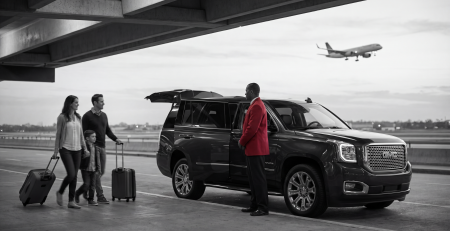
- Pickup: flight-monitored, with meet-and-greet outside of baggage claim. The visitor steps from the gate to a chauffeur with a red jacket.
- Route: direct, no surprise stops. Your chauffeur knows the building’s loading dock or executive entrance.
- The host’s text: a simple ‘you’re in good hands, see you at 4’ sent before landing. Nothing more.
- The chauffeur’s text to the host: ‘Your guest is in the car, ETA 4:05.’ Sent once. One text and done. The host doesn’t need a play-by-play.
- Return trip: same vehicle, same chauffeur, same protocol. Pre-booked at the time of arrival, not arranged morning-of.
What signals ‘you matter’ to your guest: same driver both ways, no logistical guessing, the visitor stepping into the meeting unrumpled.
Scenario 2: Family Visiting (Parents, In-Laws, Adult Children)
The visitor is a parent or in-law flying in to spend time with you. Maybe to meet a new grandchild. Maybe for a milestone. They are older, less tech-fluent, more anxious about logistics. They’ve packed too much.
The host’s transport playbook:
- Vehicle tier: Yukon or Denali. Plenty of room for luggage and any walking aids.
- Briefing: your chauffeur knows it’s a family arrival, knows the visitor’s name, knows where they’re going. The chauffeur greets them with warmth, not formality.
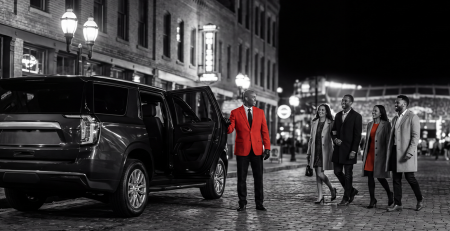
- Pickup: flight-monitored, with meet-and-greet outside of baggage claim. A driver in a professional red jacket. Your chauffeur handles all luggage.
- Route: direct, calm. No surprise highway speed. No aggressive lane changes.
- The host’s role: a phone call right after pickup. ‘You are with [chauffeur’s name], see you in 30 minutes.’
- Your chauffeur’s role: friendly conversation if the visitor wants it, quiet if they don’t. Older visitors are tired. The chauffeur takes the cue.
- Drop-off: door-to-door, right to the front entrance. Bags inside if needed. Your chauffeur waits until the visitor is comfortable.
What signals ‘you matter’: the soft landing. The visitor’s first hour in Denver feels like family already.
Scenario 3: VIP Speaker, Industry Guest, or Keynote
The visitor is the speaker at your conference, the guest of honor at your event, or the industry name you flew in to make a presentation. They’re accomplished, often well-traveled, often hosted. They’ll compare your hospitality to a higher baseline.
The host’s transport playbook:
- Vehicle tier: Escalade. The standard for hosted speakers.
- Briefing: your chauffeur knows the visitor’s name, what they look like, and their professional title (so they greet the correct person), the event name, the venue, and the host’s expectations.
- Pickup: flight-monitored with proactive updates to the visitor’s EA or coordinator if they have one. Meetup outside of baggage claim.
- Route: direct, with optional scenic detour if there’s time and the visitor seems game. Your chauffeur asks.
- At-event support: hourly booking. Your chauffeur stays with the visitor through the event, ready for any pickup time.
- Return trip: pre-booked, confirmed, same chauffeur when scheduling allows.
What signals ‘you matter’: the visitor never has to ask where their car is, who’s driving them, or when it’s coming. They turn around when they’re ready to leave, and the car’s there.
Scenario 4: Wedding Guests of Honor
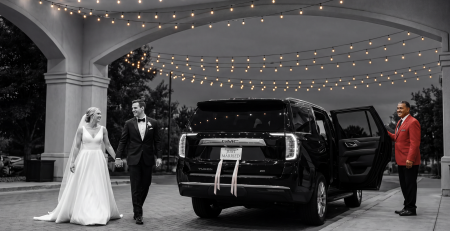
The visitor is the parent of the bride, the grandfather, the godparent, the close friend flying in from across the country for the wedding. The wedding itself has its own transportation plan, but the arrival and departure days do not.
The host’s transport playbook:
- Vehicle tier: Yukon or Escalade, depending on the visitor’s seniority.
- Briefing: your chauffeur knows the wedding date, the visitor’s relationship to the couple, the hotel block, the welcome dinner if relevant.
- Pickup: flight-monitored, with meet-and-greet outside of baggage claim. Your chauffeur greets the visitor warmly and references the wedding (‘the family is excited you are here’).
- Route: direct, with an optional stop if the visitor wants a drink before the welcome dinner.
- Coordinating with wedding transport: if the visitor is also using wedding-day shuttles, your chauffeur knows.
- Departure: same chauffeur on the way out when possible. The visit ends well.
What signals ‘you matter’: the visitor feels included in the family from the moment they land, not just at the ceremony.
The ‘Send Ahead’ vs. ‘Ride With Them’ Decision
For every hosted visit, the host has to decide: do I send the car alone to pick up the visitor, or do I ride with them?
Send the car alone (the visitor rides alone) when:
- The visitor’s flight is at a time that doesn’t work for the host.
- The visitor is going to a hotel to settle in before the host sees them.
- The host has a competing obligation (a meeting, a school pickup, an earlier flight).
- The visitor is a senior business contact who wouldn’t expect to be picked up personally.
Ride with them (the host meets the visitor outside of baggage claim or rides in the car) when:
- The visitor is family or a close personal friend.
- The trip is short and the time in the car is the only one-on-one time you’ll have.
- The visitor is anxious about travel or unfamiliar with the city.
- The visit is a milestone (a wedding, a birth, a memorial) where the host’s presence at arrival is part of the welcome.
When in doubt, ask the visitor in advance: ‘Would you prefer to settle in at the hotel first, or shall I meet you at the airport?’ This two-question text removes all guessing. Most senior visitors will say ‘let me settle in.’ Most family visitors will say ‘I’d love to see you sooner.’
What to Brief Your Chauffeur Before the Pickup
For any hosted visit, send your driver a brief at the time of booking. Keep it short:
- The visitor’s full name, with phonetic spelling if it’s unusual.
- The visitor’s relationship to you (board member, parent, speaker, friend).
- The reason for the visit (business meeting, family visit, event).
- Any preferences the visitor has stated (or that you know from past visits).
- The destination and any context the chauffeur should know about it.
- How you would like the chauffeur to communicate with you during the trip.
With all this information, your chauffeur lands at DIA already knowing what kind of trip this is.
What’s Included When DriveDenver Handles Your Guest’s Transportation
- A luxury SUV (Yukon, Denali, or Escalade) matched to the visitor’s tier.
- A professional chauffeur briefed on the visitor and the visit in advance.
- Flight-monitored pickup. Your driver tracks the flight from takeoff. We wait for them when their flight is late.
- Meetup outside of baggage claim at DIA. A professional driver in a red-jacket waiting at curbside, luggage handled.
- Pre-stocked vehicle preferences (water choice, music genre, temperature) if specified at booking.
- Direct door-to-door routing to the hotel or destination.
- A proactive single text to you when the visitor is in the car. One text, not a play-by-play.
- Return-trip coordination, ideally with the same chauffeur.
- Clean invoicing tagged to the right cost center, account, or expense category.
We treat your visitor’s first hour in Denver as your branding. Because that’s what it is.
Frequently Asked Questions
What if the visitor wants to talk to the chauffeur about their trip?
The chauffeur reads the room. Most visitors prefer the quiet for the first 15 minutes after a flight and may open up later. A briefed chauffeur knows the visit context and can have substantive conversation when invited.
Should I tip the chauffeur additionally if I’m hosting?
Gratuity (20%) is built into the rate. You aren’t expected to tip on top. If your visitor offers a cash tip, the chauffeur graciously declines and notes that the host has handled it. Discreet.
Can I have the same chauffeur for the entire visit (arrival, in-town moves, departure)?
Yes, when scheduling allows. We try hard to keep the same chauffeur on a hosted visit because the continuity matters.
What if my visitor’s flight is cancelled or delayed overnight?
Your driver is reassigned without penalty. The visitor’s new flight is added to the active flight-monitored list. We wait for you, and for your guest. The visit picks up where it would’ve started.
How do I make this a standing arrangement for recurring visitors?
Set up a corporate account with saved visitor profiles. Each time a recurring visitor comes through, their preferences are already loaded. One text and done.
What if my visitor is bringing their spouse, family, or a colleague?
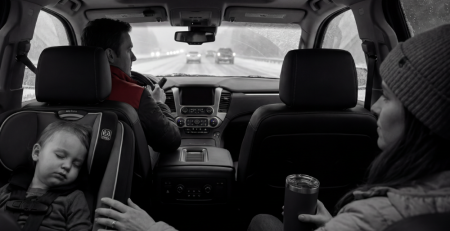
The vehicle is sized to the party. Specify additional passengers at booking. Car seats supplied on request.
The Bottom Line
Hosting an out-of-town visitor is mostly backend work. The visitor remembers the dinner, the conversation, the warmth. They never notice the logistics if it went perfectly. However, they never forget when it goes awry.
The hosts who get this right treat the transport from the airport to the hotel as part of the welcome. The right chauffeur, the right vehicle, the right brief, the right text. The visitor lands. The car’s there. The host’s reputation is intact.
This is the playbook. Use it for all your visitors moving forward.
Reserve a Hosted Visit Transfer
Send your visitor’s flight details, destination, and any context to 303-717-8113 or drivedenvercarservice.com. We confirm within 2 hours. For recurring hosting, ask about our corporate account setup.







Leave a Reply